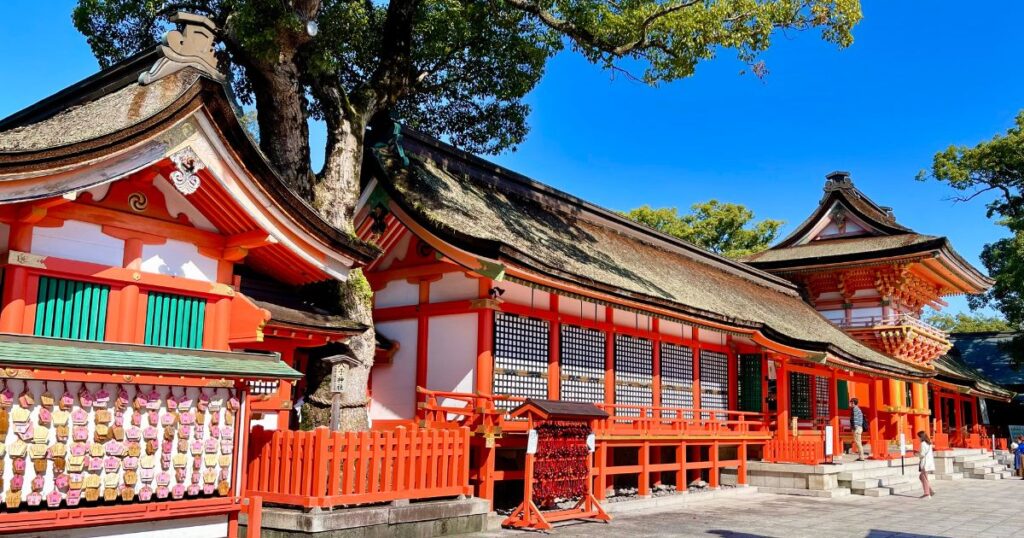
Usa Jingu is not just another stop on a Kyushu ride.
It is the head shrine of all Hachiman shrines in Japan, with nearly 1,300 years of history.
Despite its status and formality, Usa Jingu is surprisingly welcoming to motorcycle travelers.
Easy access from major roads, clear parking, and a calm atmosphere make it an ideal destination for riders who want more than just scenic roads.
This guide introduces Usa Jingu from a rider’s perspective—what it is, how to get there, and how to visit respectfully without stress.
Why Usa Jingu Matters: The Spiritual Origin of Hachiman Shrines

Founded in 725 AD, Usa Jingu has long been one of Japan’s most important Shinto shrines.
It is dedicated to three deities, including Hachiman, a god historically associated with protection and warriors.
From this site, Hachiman worship spread across Japan.
Today, there are nearly 40,000 Hachiman shrines, all tracing their spiritual roots back to Usa.
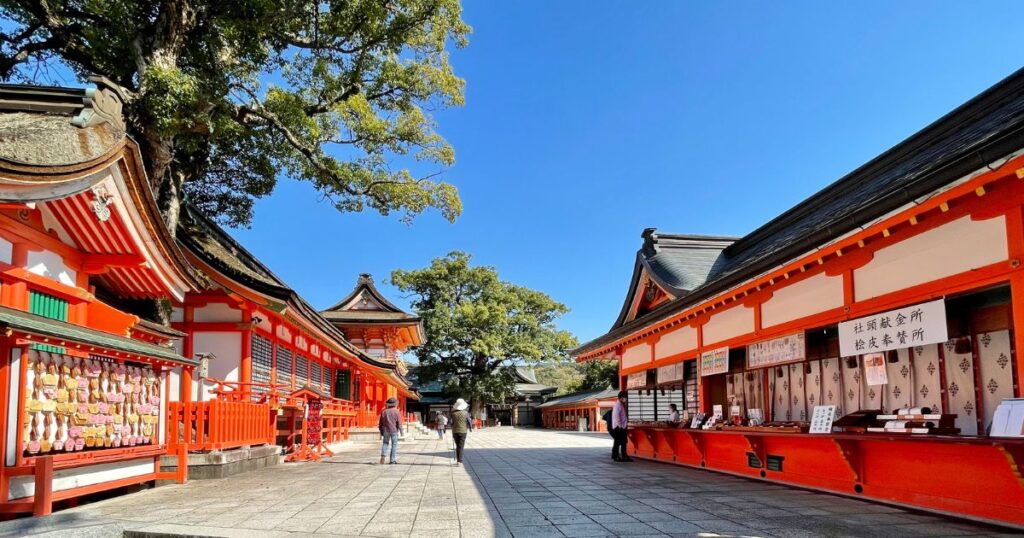
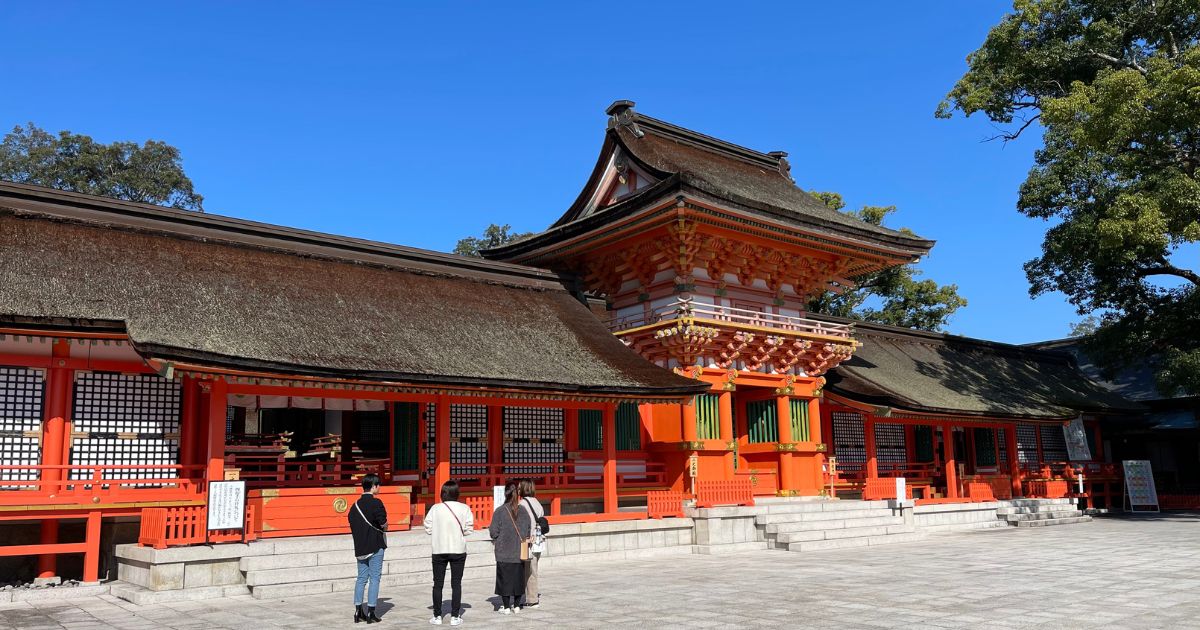
Walking through the grounds, many visitors feel an immediate sense of calm.
The atmosphere is quiet, dignified, and deeply connected to Japanese history.
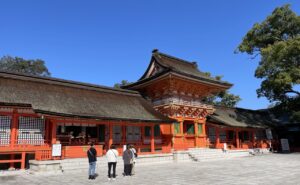
The main sanctuary in the Upper Shrine area is designated as a National Treasure, reflecting its cultural importance rather than visual grandeur.
Getting There by Motorcycle: Routes, Parking, and Time Needed
Usa Jingu is easy to reach by motorcycle from anywhere in Kyushu.
Approximate riding times:
- From Fukuoka: about 2 hours
- From Kumamoto: about 3.5 hours
- From Kagoshima: about 5 hours
Depending on your starting point, local roads can be as efficient as highways—and often more enjoyable.
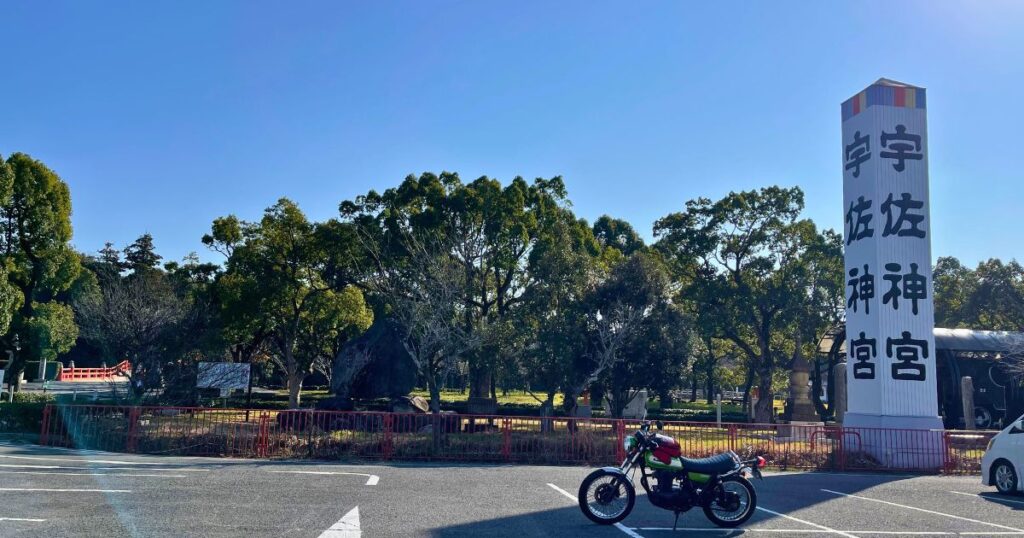
Many first-time visitors set the shrine itself as their destination on Google Maps—but riders will have a much smoother visit by heading straight to the parking area.
The destination shown here is the official Usa Jingu parking area where motorcycles are allowed.
The parking entrance is clearly visible from the national highway, making it easy to spot without slowing down or making sudden turns.
For riders, setting the parking area as the destination is far more practical than navigating directly to the shrine buildings.
Motorcycle Parking

Motorcycles are welcome.
Parking costs 100 yen per visit, with no time limit.
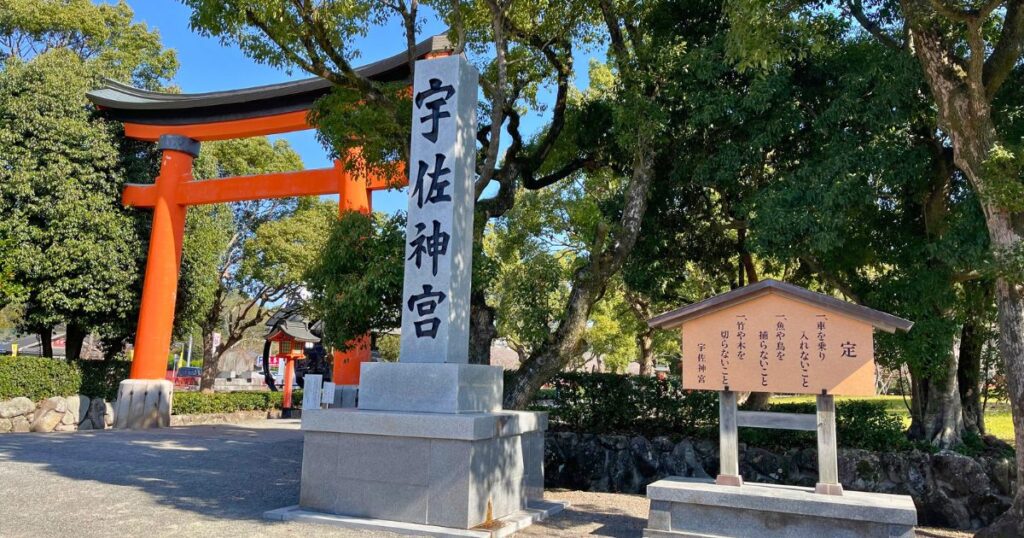
Riders enter through a side lane near the main gate, pay the fee directly to staff, and park in a designated motorcycle area.
There is no ticket system, and the process is simple even for first-time visitors.
How Much Time to Allow
The shrine grounds are spacious, with gentle hills and stairs.
Plan at least one hour for a basic visit.
If you enjoy walking slowly, taking photos, or resting after your ride, two hours or more feels just right.
Visiting the Shrine: Order, Etiquette, and Basic Respect

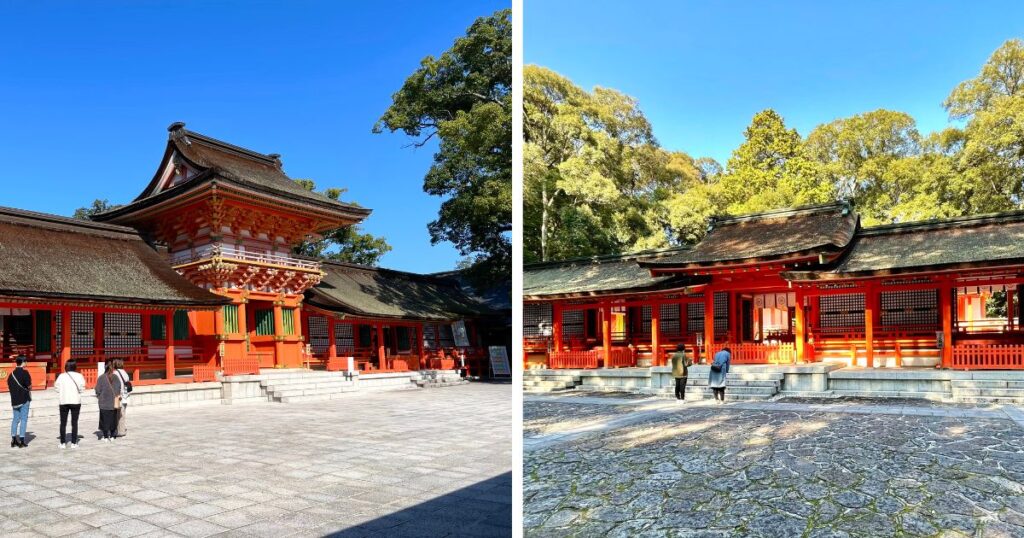
Usa Jingu has two main areas:
- Upper Shrine
- Lower Shrine
Visitors traditionally start at the Upper Shrine and then continue to the Lower Shrine.
Stopping after only one is considered incomplete, so it’s best to visit both if time allows.
Simple Worship Etiquette (No Stress)
Usa Jingu uses a slightly different style of prayer than most shrines:
- Bow twice
- Clap four times
- Bow once
That’s all you need to remember.
Visitors are not expected to be perfect—showing calm respect is what matters most.
After the Visit: Goshuin, Charms, and Local Food

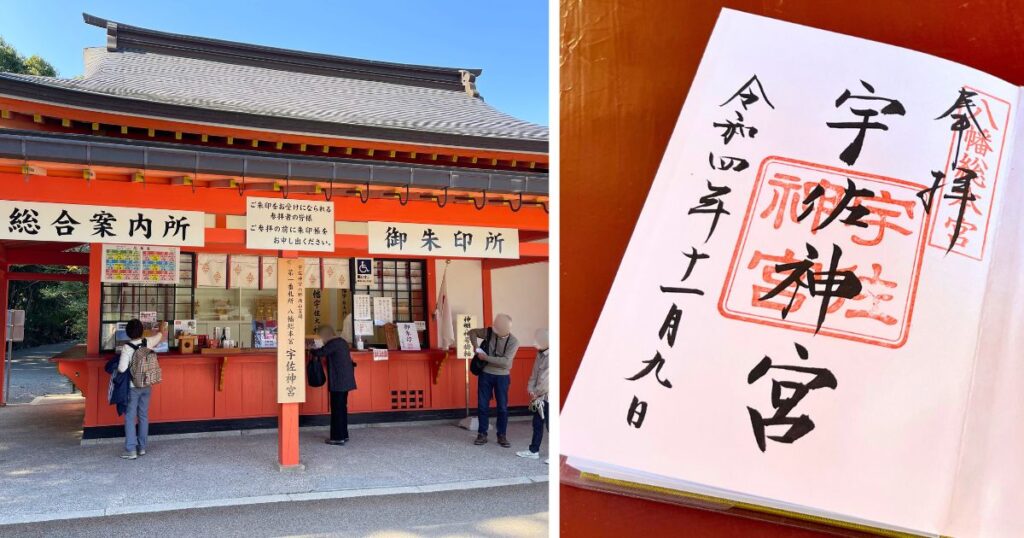
Goshuin (Shrine Stamp)
Usa Jingu offers traditional goshuin, handwritten in your stamp book.
One unique feature is that visitors leave their book before entering the shrine.
The staff prepares the goshuin while you pray, and you collect it afterward.
Charms and Souvenirs

Protective charms are available near the Upper Shrine.
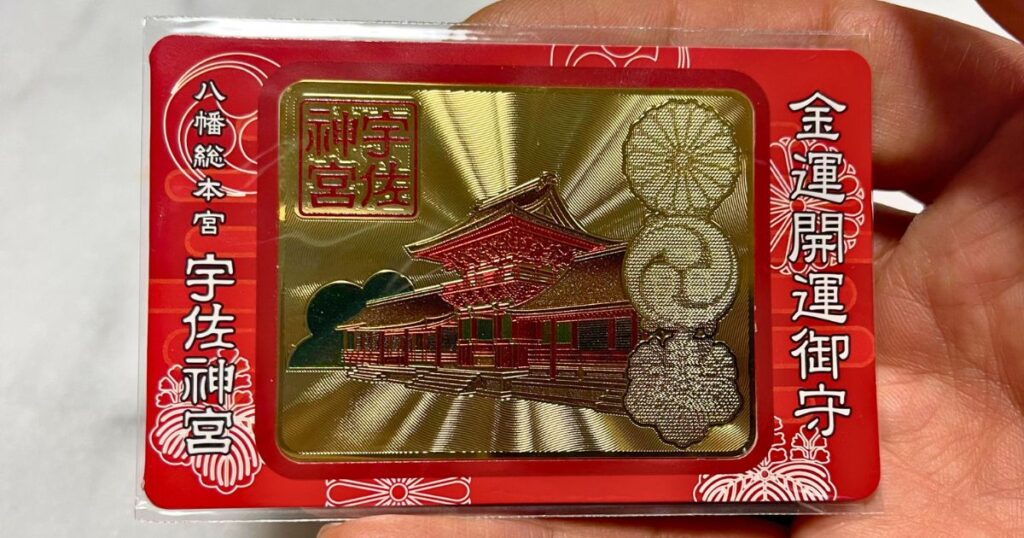
Among them is a modern, card-style good-luck charm that fits easily in a wallet—popular with travelers.

Rest and Local Flavor

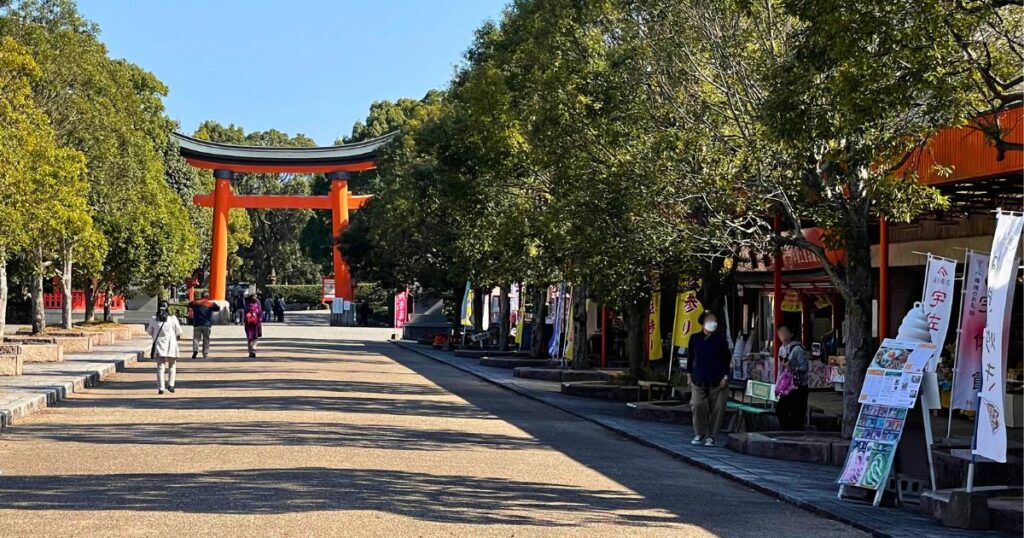
Near the entrance, small shops line the approach.
Local fried chicken, a specialty of this region, is especially popular with riders refueling after a long ride.
Most shops close by late afternoon, so it’s best to stop before evening.
Why Usa Jingu Works So Well for Riders

Usa Jingu offers something rare:
a place where riding enjoyment and quiet reflection meet naturally.
You arrive on two wheels, step away from the road noise, and spend time in a space shaped by centuries of belief and history.
Then, refreshed, you ride on.
For riders exploring Kyushu—or Japan in general—Usa Jingu is more than a destination.
It’s a meaningful pause in the journey.
🏍 About the Author
Muranasu
Motorcycle writer & lifelong rider, based in Kumamoto, Japan
I have been riding motorcycles since 1984 and hold a large-displacement motorcycle license since 1986.
Over the years, I’ve ridden a wide range of bikes—from the legendary Kawasaki GPz900R Ninja to my current companion, a Kawasaki 250TR.
Today, I enjoy relaxed touring focused on local culture: visiting shrines, collecting goshuin (shrine stamps), and riding to places with great coffee and scenery.
The roads and landscapes of Aso, Kyushu, are my all-time favorites.
I also work as a contract writer for a Japanese motorcycle media outlet, creating rider-focused articles based on real experience rather than theory.
With over 40 years of riding history—and zero accidents—I continue to explore what a safe, enjoyable, and sustainable motorcycle lifestyle really means.
🚗 If you’re also interested in cars, I run another blog focused on real-world 4WD & SUV ownership in Japan (Jimny-centered).